
Blog
Best Bedtime Routine UK: Simple Habits for Better Sleep Every Night
Jul
Many people struggle to fall asleep quickly or wake up feeling refreshed. Busy schedules, stress, late-night screen time, and irregular sleep patterns can all affect sleep quality. If you’ve ever wondered about the best bedtime routine UK residents can follow, you’re not alone.
A healthy bedtime routine is more than simply going to bed early. It involves creating consistent evening habits that help your body recognise when it’s time to sleep. Small lifestyle changes often make a significant difference over time.
At Safesleepuk, we believe that good sleep begins with healthy routines. While some people may require additional support, establishing positive evening habits should always be the first step toward improving overall sleep quality.
What Is the Best Bedtime Routine UK Adults Should Follow?
The best bedtime routine is one that prepares both your mind and body for restful sleep. Consistency is far more important than perfection.
Your body’s internal clock, known as the circadian rhythm, responds well to predictable routines. Going to bed and waking up at similar times every day helps regulate natural sleep hormones.
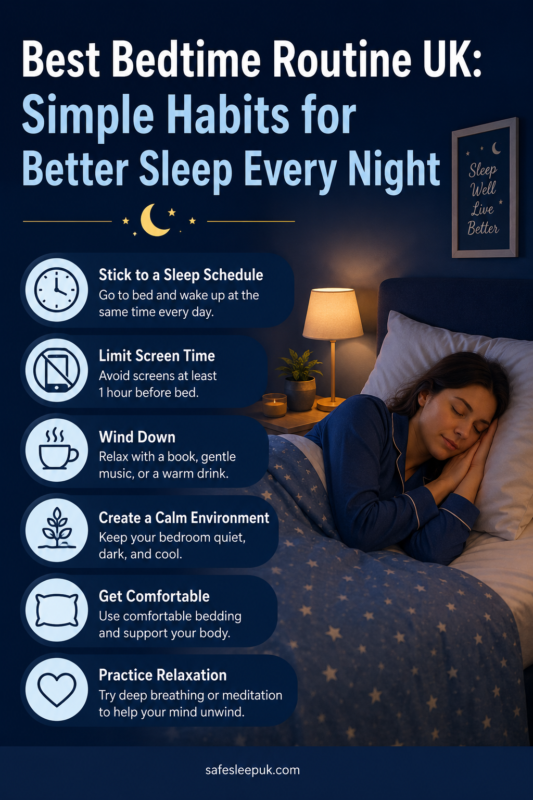
A practical bedtime routine usually includes:
- Following a consistent sleep schedule
- Reducing exposure to bright screens
- Creating a relaxing bedroom environment
- Avoiding heavy meals before bedtime
- Practising calming activities
- Limiting caffeine during the evening
These habits support long-term sleep health rather than offering a temporary solution.
Why Does a Consistent Bedtime Routine Matter?
Your body prefers routine. Irregular sleeping hours can confuse your internal clock, making it harder to fall asleep naturally.
Following a structured evening routine may help:
- Improve overall sleep quality
- Reduce the time it takes to fall asleep
- Support daytime energy levels
- Promote better concentration
- Encourage healthier sleep cycles
Healthy sleep habits can also contribute to improved mood and better daily performance.
How Can You Build an Effective Evening Routine?
1. Set a Fixed Bedtime
Choose a bedtime that allows approximately seven to nine hours of sleep. Even during weekends, try to stay within the same schedule to keep your circadian rhythm stable.
2. Reduce Screen Time
Phones, tablets and televisions emit blue light that may interfere with the body’s natural production of melatonin. Try switching off electronic devices at least one hour before bed.
3. Create a Relaxing Bedroom
Your bedroom should encourage rest rather than stimulation.
Simple improvements include:
- Keeping the room cool
- Reducing outside noise
- Using blackout curtains if needed
- Choosing comfortable bedding
- Keeping unnecessary electronics away from the bed
A calm sleep environment makes it easier to relax both physically and mentally.
What Should You Avoid Before Going to Bed?
Some evening habits make quality sleep more difficult.
Try limiting:
- Coffee and energy drinks late in the day
- Heavy or spicy evening meals
- Alcohol close to bedtime
- Intense exercise immediately before sleep
- Checking work emails or stressful news
Replacing these habits with calming alternatives can make your bedtime routine far more effective.
Which Relaxation Techniques Can Improve Sleep?
Relaxation helps signal that the day is ending. Instead of scrolling through social media, consider activities that naturally reduce mental stimulation.
Popular evening relaxation techniques include:
- Reading a printed book
- Gentle stretching
- Deep breathing exercises
- Meditation
- Listening to calming music
- Keeping a gratitude journal
Many people find that repeating the same relaxing activities each night trains the brain to associate those actions with sleep.
How Does Diet Affect Your Bedtime Routine?
Your evening food choices can influence how easily you fall asleep.
Try to eat your evening meal at least two to three hours before bedtime. If you’re hungry later, choose a light snack instead of a large meal.
Good hydration throughout the day is also important, but drinking excessive amounts of fluid just before bed may interrupt sleep due to nighttime bathroom visits.
Some people also benefit from limiting sugary snacks in the evening, as sudden changes in blood sugar may affect sleep comfort.
Can Sleep Hygiene Really Make a Difference?
Yes. Sleep hygiene refers to daily habits that support healthy sleep over time. While there is no single solution for everyone, consistent routines often provide noticeable improvements.
At Safesleepuk, we encourage combining good sleep hygiene with healthy lifestyle choices whenever possible. Building sustainable habits creates a stronger foundation for long-term sleep wellness than relying solely on short-term fixes.
What Should You Do If Your Bedtime Routine Isn’t Working?
Healthy sleep habits often take time to produce noticeable improvements. Most people need several weeks of consistency before experiencing better sleep.
If your routine is not delivering the results you expect, consider reviewing your daily habits rather than focusing only on bedtime.
Ask yourself these questions:
- Are you maintaining the same sleep schedule every day?
- Are you consuming caffeine late in the afternoon or evening?
- Do you spend too much time using electronic devices before bed?
- Is your bedroom quiet, cool, and comfortable?
- Are stress or anxiety affecting your ability to relax?
If sleep problems continue for several weeks or begin affecting your daily life, seeking professional medical advice is recommended. Persistent sleep difficulties may sometimes be linked to an underlying health condition that requires proper assessment.
Common Mistakes That Can Disrupt Your Sleep
Even people with good intentions often make small mistakes that interfere with healthy sleep. Avoiding these habits can help improve your evening routine.
- Going to bed at different times every night.
- Using your phone in bed.
- Drinking alcohol to help you fall asleep.
- Eating large meals just before bedtime.
- Sleeping in for long periods after a poor night’s sleep.
- Working or studying in bed.
- Keeping the bedroom too warm or too bright.
Small adjustments can make your bedtime routine more effective over time and support more restorative sleep.
Building Long-Term Healthy Sleep Habits
The best bedtime routine UK adults can follow is one that is realistic and easy to maintain. Rather than making major lifestyle changes overnight, focus on introducing one healthy habit at a time.
Consistency is the key to improving sleep quality. A regular sleep schedule, a comfortable bedroom, reduced evening stimulation, and relaxation techniques work together to support your body’s natural sleep cycle.
At Safesleepuk, we encourage people to view better sleep as part of an overall healthy lifestyle. Establishing good bedtime habits today can contribute to improved wellbeing for years to come.
Frequently Asked Questions
1. What is the best bedtime routine UK adults should follow?
A good bedtime routine includes going to bed at the same time every night, limiting screen use, avoiding caffeine late in the day, creating a comfortable bedroom, and practising relaxing activities before sleep. Consistency is usually more important than following a complicated routine.
2. How long does it take for a bedtime routine to improve sleep?
Many people begin noticing improvements within two to four weeks of following a consistent bedtime routine. Individual results vary depending on lifestyle, stress levels, existing sleep habits, and overall health.
3. Why should I avoid screens before bedtime?
Electronic devices emit blue light that may delay your body’s natural production of melatonin, a hormone involved in regulating sleep. Reducing screen time before bed may help your body prepare for sleep more naturally.
4. What foods should I avoid before sleeping?
Heavy meals, spicy foods, sugary snacks, caffeinated drinks, and excessive alcohol close to bedtime may interfere with sleep quality. Eating a balanced evening meal a few hours before bed is generally a better approach.
5. What bedroom temperature is best for sleeping?
Most people sleep more comfortably in a cool bedroom. A room that is too warm can make it harder to fall asleep and may increase the likelihood of waking during the night.
6. Can a bedtime routine reduce stress?
A calming evening routine can help reduce mental stimulation before sleep. Activities such as reading, meditation, breathing exercises, or gentle stretching may help your body transition from a busy day into a more relaxed state.
7. Is it okay to sleep at different times on weekends?
Occasional changes are unlikely to cause significant problems, but regularly shifting your bedtime by several hours may disrupt your body’s internal clock. Maintaining a consistent sleep schedule throughout the week is generally recommended.
Conclusion
Creating the best bedtime routine UK residents can follow does not require expensive products or complicated methods. Healthy sleep is built through consistent daily habits, a relaxing evening routine, and a sleep-friendly environment.
Whether your goal is to improve sleep quality, wake feeling more refreshed, or support your overall wellbeing, small changes made consistently often lead to meaningful long-term results. By prioritising good sleep hygiene and maintaining realistic habits, you can give your body the best opportunity for restorative and refreshing sleep every night.
