
Blog
How to Fix Sleep Schedule UK: A Complete Guide to Better Sleep
Jun
Introduction
If you’ve been wondering How to Fix Sleep Schedule UK, you’re not alone. Many people struggle with irregular sleeping patterns because of shift work, busy lifestyles, stress, excessive screen time, or late-night habits.
A disrupted sleep routine doesn’t only make you feel tired. It can also affect concentration, mood, productivity, and overall wellbeing. The good news is that most sleep schedules can be improved by making consistent lifestyle adjustments rather than relying on quick fixes.
This guide explains practical, evidence-based strategies that can help reset your body clock naturally while building healthier long-term sleep habits.
Why Does Your Sleep Schedule Become Disrupted?
Your body follows a natural internal clock known as the circadian rhythm. When daily habits constantly change, this rhythm becomes out of sync.
Common causes include:
- Late-night screen use
- Irregular work shifts
- Weekend sleep-ins
- Stress and anxiety
- Travelling across time zones
- Too much caffeine late in the day
- Poor bedtime routines
Understanding what causes the disruption is the first step towards improving sleep consistency.
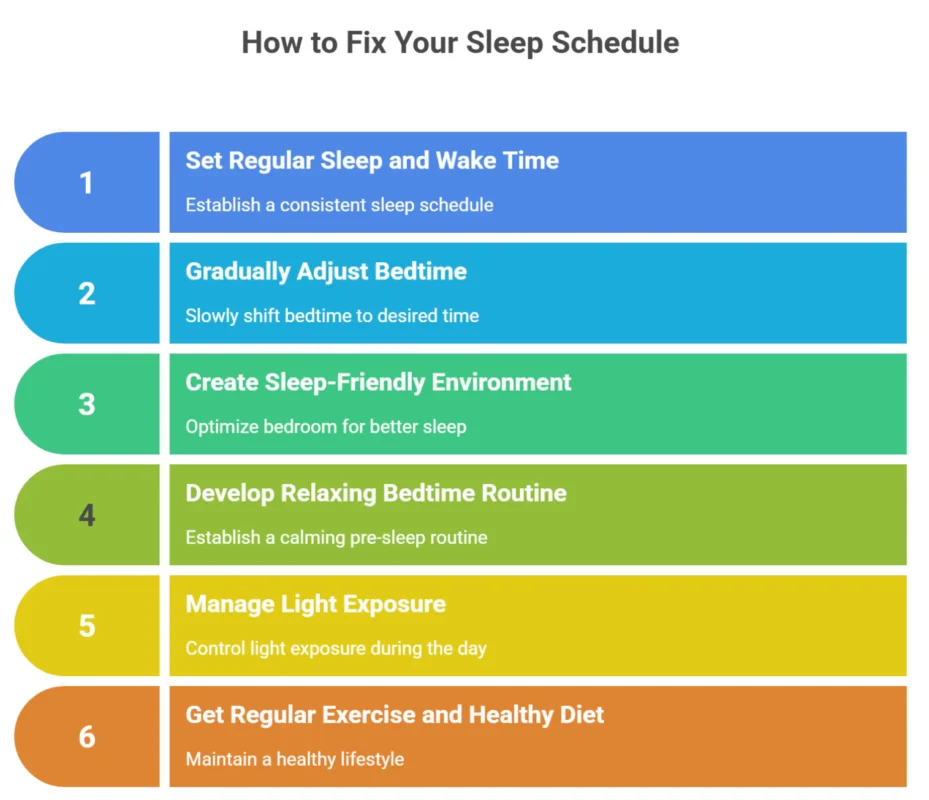
How Can You Reset Your Sleep Schedule?
Changing your sleeping pattern doesn’t usually happen overnight. Small, consistent changes often produce the best long-term results.
1. Wake Up at the Same Time Every Day
Choose one wake-up time and stick to it every day, including weekends. This helps train your body’s internal clock more effectively than changing your bedtime repeatedly.
2. Adjust Your Bedtime Gradually
If your sleep schedule is significantly delayed, move your bedtime earlier by around 15 to 30 minutes every few nights rather than making a sudden large adjustment.
3. Get Morning Sunlight
Natural daylight shortly after waking helps regulate melatonin production and reinforces a healthy circadian rhythm. Even a short walk outside can make a noticeable difference.
What Is the Best Bedtime Routine?
A relaxing bedtime routine signals to your brain that it’s time to prepare for sleep.
Try these healthy habits:
- Read a book
- Practice deep breathing
- Keep lights dim
- Take a warm shower
- Avoid stressful conversations
- Listen to calming music
Repeating the same routine each evening strengthens your body’s natural sleep signals.
How Does Screen Time Affect Sleep?
Phones, tablets and laptops emit blue light that may delay melatonin production. This makes it harder for many people to fall asleep.
Consider switching off electronic devices at least one hour before bedtime. If screen use is unavoidable, reducing brightness or enabling night mode may help minimise disruption.
Can Food and Drinks Improve Sleep?
Diet plays an important role in sleep quality.
Helpful habits include:
- Avoid caffeine during late afternoon and evening.
- Limit alcohol before bedtime.
- Avoid large meals shortly before sleeping.
- Stay hydrated throughout the day.
- Choose lighter evening meals when possible.
Maintaining regular meal times also supports your body’s internal clock.
Should You Exercise to Improve Sleep?
Regular physical activity is one of the most effective ways to improve sleep quality.
Walking, cycling, swimming or strength training during the day may help you fall asleep faster and enjoy deeper sleep. However, intense exercise immediately before bedtime may keep some people awake.
What If Stress Is Keeping You Awake?
Stress is a common reason people struggle with falling asleep.
Simple relaxation techniques may help calm your mind before bedtime.
- Meditation
- Deep breathing
- Gentle stretching
- Journaling
- Mindfulness exercises
Creating a relaxing evening environment often supports better sleep consistency.
When Should You Seek Professional Advice?
If your sleep problems continue for several weeks despite improving your routine, it may be helpful to speak with a qualified healthcare professional.
Persistent insomnia, loud snoring, breathing interruptions during sleep, or excessive daytime tiredness could indicate an underlying sleep disorder that requires further assessment.
Educational resources from Safesleepuk encourage people to prioritise healthy sleep habits alongside appropriate professional guidance when needed.
Simple Daily Habits That Support Better Sleep
- Keep a consistent bedtime.
- Wake up at the same time daily.
- Reduce evening screen exposure.
- Exercise regularly.
- Spend time outdoors.
- Avoid excessive caffeine.
- Create a cool, quiet bedroom.
- Follow a relaxing bedtime routine.
Frequently Asked Questions
How long does it take to fix a sleep schedule?
Most people notice gradual improvements within one to three weeks when they consistently follow healthy sleep habits. Larger schedule changes may require additional time depending on lifestyle and individual circumstances.
What is the fastest way to reset your body clock?
Waking up at the same time every morning, getting natural daylight early in the day, reducing evening screen exposure, and maintaining a consistent bedtime are among the most effective ways to reset your body clock naturally.
Why do I keep waking up during the night?
Night-time waking may be linked to stress, caffeine, alcohol, environmental disturbances, irregular sleep schedules, or underlying health conditions. Improving sleep hygiene often helps reduce interruptions.
Can naps affect my sleep schedule?
Yes. Long or late-afternoon naps may make it harder to fall asleep at night. If you need a nap, aim for around 20 minutes earlier in the day.
Does exercise help improve sleep?
Yes. Regular physical activity supports deeper sleep and better overall sleep quality. Most people benefit from exercising earlier in the day rather than immediately before bedtime.
Can stress cause an irregular sleep schedule?
Yes. Stress can increase alertness, making it difficult to fall asleep or stay asleep. Relaxation techniques and consistent bedtime routines may help improve sleep over time.
Conclusion
Learning how to fix sleep schedule UK starts with consistency rather than perfection. Small daily improvements—such as maintaining regular wake times, reducing screen exposure, staying physically active, and creating a calming bedtime routine—can make a significant difference over time.
Safesleepuk believes that informed decisions and healthy lifestyle habits are the foundation of better sleep. By following practical strategies and seeking professional advice when necessary, many people can gradually restore healthier sleeping patterns and improve their overall quality of life.
