
Blog
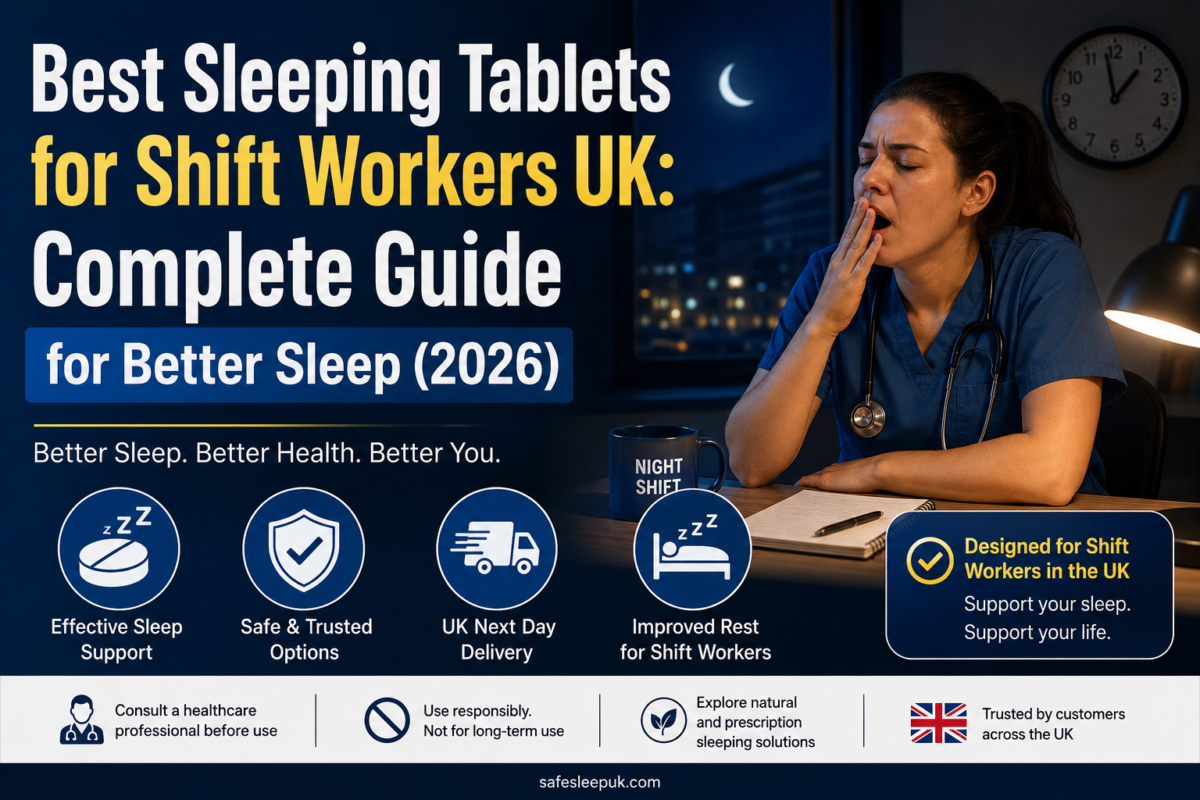
Best Sleeping Tablets for Shift Workers UK: Complete Guide for Better Sleep (2026)
Jul
Introduction
Best Sleeping Tablets for Shift Workers UK
Finding the best sleeping tablets for shift workers UK can be a difficult task when you’re having problems maintaining your sleep patterns. Nurses, doctors, security guards, warehouse workers, emergency service workers, taxi drivers, or factory workers – all of these people and many others can be affected by long shifts that disrupt their natural circadian rhythms.
Shift worker insomnia can be incredibly frustrating to deal with, and it can have negative consequences for your performance at work and even your mood and health.
Many people ask questions about sleeping pills for shift workers in order to address their poor sleeping patterns, but medication is not always the answer. It’s important to identify what symptoms you’re struggling with and how to treat them, as well as your general health, job schedule, and lifestyle.
At SafeSleepUK, it is our pleasure to introduce a comprehensive guide that will teach you everything you need to know about improving your health as a shift worker. We’ll discuss the benefits and drawbacks of medication, the importance of developing healthy sleeping habits, and much more.
Why Do Shift Workers Have Such A Hard Time Trying To Sleep?
Our bodies feature an interesting mechanism that allows us to maintain a certain level of discipline without the use of any external stimuli – it’s called the circadian rhythm.
It dictates the times of the day when we’re supposed to be asleep or conscious. However, there are things that can interfere with this process – and shift working is one of them.
Working long hours during the night or early morning and trying to rest during daytime hours puts significant strain on your body, making you lose control over your natural sleep patterns.
Common Triggers for Shift Worker Insomnia
- Working during night hours
- Having rotating shifts
- Having to work during daytime hours
- Working too long
- Exposure to light
- Consuming caffeine
- Having family obligations
- Loud surroundings
Any of these can affect your ability to fall asleep or stay asleep during the day.
Shift worker insomnia refers to the person’s inability to fall asleep or to stay asleep due to their working hours. It usually develops as a result of working during night or rotating shifts.
Common Symptoms
- Having a hard time falling asleep
- Being unable to sleep during the day
- Waking up easily
- Having trouble concentrating
- Feeling stressed or moody
- Getting headaches
- Experiencing fatigue
- Decreased levels of productivity
Shift workers often only get 3–5 hours of sleep per day, compared to the recommended 7–9 hours.
Common Signs That You May Need To Improve Your Sleep Patterns
- Having trouble falling asleep after night shifts
- Feeling consistently tired and exhausted
- Having poor performance
- Being unable to concentrate while driving
- Having mood swings
- Needing caffeine to feel alert
- Being unable to wake up for your shifts
Best Sleeping Tablets for Shift Workers UK: What Are Your Options?
Many times, people who have a hard time trying to sleep resort to using sleeping pills. There are several different types of them – each serving its own specific purpose.
| Sleep Support Option | Best For | Advantages | Considerations |
|---|---|---|---|
| Good sleep hygiene | Mild symptoms | No medication is needed | Requires discipline |
| Relaxation techniques | Stress-related sleep issues | Drug-free | Can be time-consuming |
| Over-the-counter sleep aids | Short-term insomnia as indicated by a healthcare professional | Easy to access | Not suitable for everyone |
| Prescription sleeping tablets | Severe cases of insomnia under professional care | Can be very effective | Requires caution due to potential side effects |
The best type of treatment will depend on your particular situation. In some cases, it may be necessary to consult with a healthcare professional in order to receive adequate care.
Benefits Of Sleeping Tablets For Shift Workers
In some cases, sleeping pills may be beneficial for people who suffer from insomnia.
Prescribed sleeping medications can aid you in a number of ways, such as:
- Helping you fall asleep faster after a hard night’s work
- Allowing you to sleep deeper and longer
- Helping you feel well-rested
- Helping you focus better on your tasks
- Reducing stress-induced insomnia
On the other hand, many shift workers report that they’re unable to fall asleep or to stay asleep due to their work schedules. This can have a number of detrimental effects on their health, performance, and overall well-being.
Fortunately, there are various things you can do in order to improve your sleep cycle and reduce instances of insomnia.
Night Shift Sleep Tips
The following night shift sleep tips can help you feel more rested and reduce the occurrence of insomnia.
Wear Sunglasses On Your Way Home
Bright sunlight can stimulate your brain and tell it that it’s morning. In order to avoid this, you can wear sunglasses in order to limit your exposure to light.
Create A Dark Environment
You can do this by:
- Wearing an eye mask
- Using draft blockers
- Keeping your room dark with thick curtains
Darkness promotes higher concentrations of melatonin, the hormone responsible for making you sleepy.
Make Sure Your Room Is Cool
Most sleep experts will tell you that a cool room is much better for sleep than a hot one.
The ideal temperature for sleeping is around 16–19°C.
Try To Minimize Noise
This can be achieved by:
- Using earplugs
- Using white noise machines
Avoid Eating Heavy Meals Before Going To Bed
Your body will have to work harder in order to digest them, so it’s best to avoid them in order to get a good night’s rest.
Limit Your Caffeine Consumption
Coffee, energy drinks, and black tea can all prevent you from falling asleep.
Stick To A Strict Sleeping Schedule
This schedule should be applied both during workdays and weekends, insofar as it’s possible.
Foods and Drinks That May Help You Improve Your Sleep After A Night Shift
Sleeping pills for shift workers are not the only things that can help you combat insomnia. In fact, some natural foods can actually help you fall asleep faster and make you less prone to having bad nights.
Foods That May Help You Sleep Better
| Food | Why It May Help |
|---|---|
| Bananas | They contain magnesium and potassium, which help with muscle function, relaxation, and the production of melatonin. |
| Oats | They help you feel full and contain carbohydrates, which make it easier for your body to make melatonin. |
| Kiwi | Some studies suggest that kiwi can aid with sleep. |
| Almonds | They contain magnesium, which can help you relax. |
| Cherries (especially tart ones) | They contain melatonin, which makes you sleepy. |
| Greek yoghurt | They contain protein that can keep you full until morning. |
| Wholegrain toast | They provide slow-releasing carbohydrates that can help you fall asleep. |
Drinks That May Help You Prepare For A Nap Before Your Shift
| Drinks | Why It May Help |
|---|---|
| Warm milk | Can help you unwind before sleep. |
| Camomile tea | Helps your body prepare for rest. |
| Peppermint tea | A relaxing herbal option. |
| Decaffeinated herbal teas | Good alternatives before bedtime. |
| Water | Important for hydration, but avoid large amounts before sleep. |
| Energy drinks | May keep you awake. |
| Black tea | Contains caffeine. |
| Coffee | May interfere with sleep. |
| Colas | Contain caffeine and sugar. |
| Alcohol | May make you sleepy initially but often disrupts sleep quality. |
Lifestyle Tips That Can Help Shift Workers Get A Better Night’s Rest
Even the best sleeping tablets for shift workers UK can’t help you if you still have unhealthy habits.
Develop A Wind-Down Routine
Your brain has to know that it’s time to sleep, so you may want to:
- Take a warm shower
- Read a book
- Do some stretches
- Listen to relaxing music
Avoid engaging in stimulating activities just before you sleep.
Try To Avoid Using Screens Too Late In The Day
Blue light can interfere with your sleep cycles.
Consider:
- Limiting screen time
- Using blue-light filters
Get Enough Exercise
Exercise is important for everybody, including people who have a hard time trying to sleep.
Avoid exercising immediately before bedtime.
Comparison Table Of Sleep Support Options
| Option | What It’s Good For | Short Term | Long Term | Requires Professional Advice |
|---|---|---|---|---|
| Good sleep hygiene | Mild symptoms | ✔ | ✔ | No |
| Relaxation techniques | Stress-related sleep issues | ✔ | ✔ | No |
| Blackout curtains & earplugs | Light and noise reduction | ✔ | ✔ | No |
| Over-the-counter sleeping pills | Short-term insomnia | ✔ | Usually No | Pharmacist advice |
| Prescription sleeping tablets | Severe insomnia | ✔ | Usually No | ✔ |
| Cognitive Behavioural Therapy for Insomnia (CBT-I) | Chronic insomnia | ✔ | ✔ | ✔ |
Advantages And Disadvantages Of Sleeping Tablets
| Advantages | Disadvantages |
|---|---|
| May help you fall asleep faster | Can cause daytime drowsiness |
| Can help maintain deeper sleep | May cause dependence in some cases |
| Can help you feel rested | Can interfere with other medications |
| Can help with short-term insomnia | May not target the root cause |
| Can improve alertness during shifts | Not suitable for everybody |
When Should You Speak To A GP About Your Insomnia?
If your insomnia has persisted for a while, interferes with your work or quality of life, you experience daytime fatigue that affects you while driving, or you snore loudly and have breathing difficulties during sleep, it’s best to speak to a healthcare professional about your condition.
Common Mistakes Shift Workers Make
- Drinking coffee too close to bedtime
- Falling asleep with the curtains open
- Spending too much time looking at phones in bed
- Working overtime instead of resting
- Sleeping in a noisy environment
- Having irregular bedtime schedules
- Using alcohol as a sleep aid
Myths Vs Facts About Shift Worker Insomnia
| Myth | Fact |
|---|---|
| Sleeping pills are the only effective solution. | Lifestyle improvements help many people. |
| Everybody needs exactly eight hours of sleep. | Sleep needs vary between individuals. |
| Alcohol helps you sleep better. | It often disrupts sleep quality. |
| Daytime sleeping is pointless. | It can be beneficial for shift workers. |
| Shift workers cannot develop healthy sleep habits. | Healthy routines are possible with consistency. |
Expert Tips For Better Sleep After Night Shifts
- Keep your bedroom cool, dark, and quiet.
- Sleep in long, uninterrupted stretches whenever possible.
- Avoid caffeine before bedtime.
- Get regular daylight exposure.
- Exercise consistently.
- Develop a relaxing bedtime routine.
- Speak with a healthcare professional about chronic insomnia.
Why Is It Important To Take Care Of Your Sleep Health As A Shift Worker?
Shift worker insomnia and poor sleeping patterns often result in:
- Poor concentration
- Memory impairment
- Emotional instability
- Reduced work performance
- Increased risk of car crashes
- Poor physical health
It’s crucial to look after your sleep health in order to avoid these problems.
How Can SafeSleepUK Help?
At SafeSleepUK, we strongly believe that everyone who has an interest in health matters should have access to reputable, easy-to-understand information on sleep health and insomnia.
By learning about healthy sleeping patterns, discussing the benefits and drawbacks of various forms of treatment, and consulting with a healthcare professional, you’ll be able to make educated decisions regarding your sleep health.
Frequently Asked Questions (FAQs)
1. What Are The Best Sleeping Tablets For Shift Workers UK?
Depending on your specific insomnia triggers and your personal preferences, different approaches to sleep support may be more or less beneficial for you. In most cases, medication is only used as an auxiliary tool for managing insomnia while other measures, such as developing healthy sleep hygiene, are taken. Speaking with a healthcare professional can help you determine the best course of action.
2. How Can I Sleep After A Night Shift?
Make sure to create suitable conditions for sleep, avoid caffeine before bedtime, establish a regular sleeping schedule, and develop a relaxing bedtime routine.
3. What Causes Shift Worker Insomnia?
Irregular working patterns often interfere with people’s circadian rhythms, preventing them from being able to fall asleep or stay asleep during the day.
4. Are Sleeping Pills Safe For Long-Term Use?
Most prescription sleeping pills aren’t recommended for long-term use, as doing so could cause side effects or lead to dependence.
5. Can Blackout Curtains Help You Sleep Better During The Day?
Yes, as they help reduce exposure to light, which is harmful to your sleep health.
6. Does Caffeine Consumption Negatively Affect Your Sleep?
Yes. It’s best to avoid consuming caffeine several hours before bedtime.
7. Should I Avoid Exercising If I Have To Work Overnight?
Regular exercise is beneficial, but exercising immediately before bedtime may make falling asleep more difficult.
8. When Should I Speak With A Healthcare Professional About My Insomnia?
If your insomnia persists for an extended period, interferes with your daily life, causes excessive daytime sleepiness, or is associated with loud snoring and breathing difficulties during sleep, speak with a healthcare professional.
