
Blog
Why Can’t I Sleep at Night UK? Common Causes and Effective Solutions
Jun
Introduction
If you’ve ever found yourself lying awake wondering, “Why Can’t I Sleep at Night UK? Common Causes and Effective Solutions“, you’re not alone. Sleep problems affect millions of people across the United Kingdom every year. Whether you’re struggling to fall asleep, waking up repeatedly during the night, or feeling tired despite spending hours in bed, poor sleep can affect your health, mood, productivity, and overall quality of life.
Many factors can contribute to sleep difficulties, including stress, lifestyle habits, health conditions, environmental factors, and irregular sleep schedules. Understanding the root cause is the first step toward improving your sleep quality and waking up feeling refreshed.
This guide explores the most common reasons people experience sleep problems in the UK, evidence-based solutions, and practical strategies that can help you achieve healthier sleep patterns.
What Does It Mean When You Can’t Sleep at Night?
Difficulty sleeping can take several forms. Some people cannot fall asleep despite feeling tired, while others wake up throughout the night and struggle to get back to sleep.
Common symptoms include:
- Taking more than 30 minutes to fall asleep
- Waking up multiple times during the night
- Waking too early in the morning
- Feeling tired despite spending enough time in bed
- Difficulty concentrating during the day
- Daytime fatigue and irritability
Occasional sleeplessness is normal. However, persistent sleep difficulties may indicate an underlying issue that needs attention.
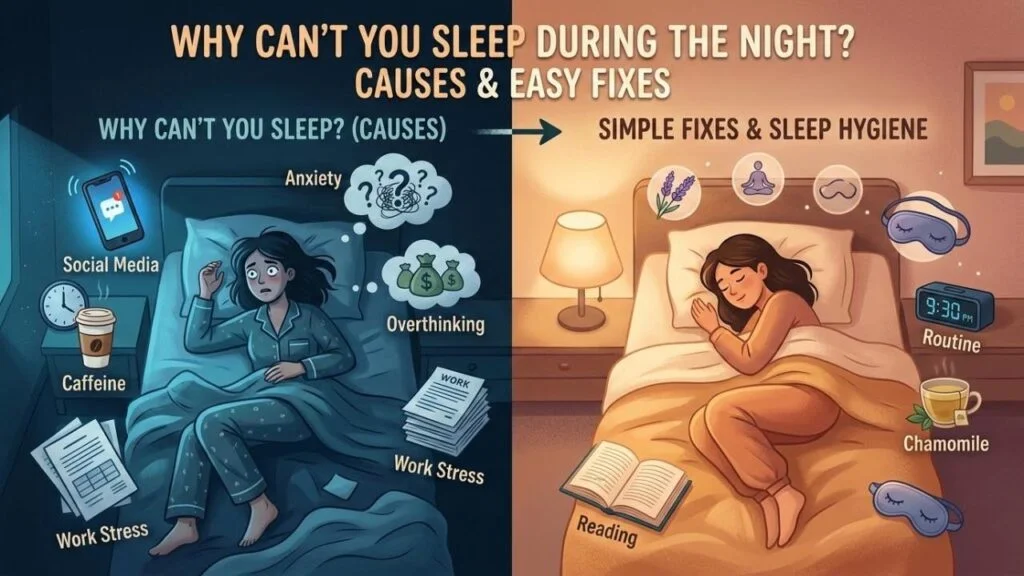
Why Can’t I Sleep at Night UK? The Most Common Causes
1. Stress and Anxiety
One of the leading causes of sleep problems is stress. Work deadlines, financial concerns, family responsibilities, and daily pressures can keep the mind active long after bedtime.
When stress levels increase, the body produces more cortisol, often referred to as the stress hormone. Elevated cortisol levels can make relaxation difficult and interfere with normal sleep cycles.
Common signs include:
- Racing thoughts at bedtime
- Difficulty relaxing
- Feeling restless during the night
- Frequent waking
2. Poor Sleep Hygiene
Sleep hygiene refers to habits and routines that influence sleep quality. Many people unknowingly engage in behaviours that disrupt natural sleep patterns.
Examples include:
- Using smartphones before bed
- Watching television late at night
- Irregular sleep schedules
- Sleeping in on weekends
- Working from bed
These habits can interfere with the body’s internal clock and make falling asleep more difficult.
3. Excessive Screen Time
Electronic devices emit blue light that can suppress melatonin production. Melatonin is the hormone responsible for regulating sleep and wake cycles.
Regular exposure to screens during the evening may delay sleep onset and reduce overall sleep quality.
4. Caffeine and Stimulants
Many people underestimate how long caffeine remains active in the body. Coffee, tea, energy drinks, chocolate, and certain medications can affect sleep for several hours.
Even consuming caffeine in the afternoon may contribute to difficulties falling asleep later in the evening.
5. Irregular Work Schedules
Shift workers frequently experience sleep disruptions because their sleep schedule conflicts with the body’s natural circadian rhythm.
This is especially common among healthcare professionals, emergency workers, transport employees, and hospitality staff throughout the UK.
6. Mental Health Conditions
Sleep and mental health are closely connected. Conditions such as anxiety disorders, depression, and chronic stress can significantly affect sleep quality.
In many cases, sleep difficulties may be one of the earliest signs of an underlying mental health concern.
7. Medical Conditions
Several health conditions can contribute to poor sleep, including:
- Sleep apnoea
- Restless legs syndrome
- Chronic pain
- Asthma
- Heart disease
- Thyroid disorders
- Gastroesophageal reflux disease (GERD)
If sleep problems persist despite lifestyle improvements, professional medical assessment may be necessary.
How Does Insomnia Affect Daily Life?
Insomnia is one of the most common sleep disorders and can have significant consequences when left unmanaged.
Potential effects include:
- Reduced concentration
- Poor memory performance
- Lower productivity at work
- Increased risk of accidents
- Mood changes and irritability
- Weakened immune function
- Reduced quality of life
Chronic insomnia can also contribute to long-term physical and mental health challenges.
What Is the Best Way to Improve Sleep Naturally?
Many people can improve sleep quality through simple lifestyle changes.
Maintain a Consistent Sleep Schedule
Going to bed and waking up at the same time every day helps regulate your internal body clock.
Create a Relaxing Bedtime Routine
Develop calming habits before sleep, such as:
- Reading a book
- Taking a warm bath
- Listening to relaxing music
- Practising mindfulness exercises
Reduce Evening Screen Exposure
Try avoiding phones, tablets, and computers for at least one hour before bedtime.
Limit Caffeine Intake
Avoid caffeinated beverages during the late afternoon and evening whenever possible.
Exercise Regularly
Physical activity supports better sleep quality, although intense exercise immediately before bed may be counterproductive for some individuals.
When Should You Seek Professional Help?
Occasional sleep difficulties are common. However, professional support may be appropriate if:
- Sleep problems continue for several weeks
- Daytime functioning is affected
- You experience loud snoring or breathing interruptions
- Sleep difficulties worsen over time
- Fatigue affects work performance or safety
Healthcare professionals can help identify underlying causes and recommend suitable treatment options.
Can Sleep Aids Help?
Some individuals explore sleep support options when lifestyle adjustments alone are not enough. Sleep aids may be considered in certain situations under professional guidance.
Products and services offered by Safesleepuk are often researched by individuals seeking information about sleep support solutions. However, understanding the underlying cause of poor sleep remains essential before considering any sleep-related product.
For many people, combining healthy sleep habits with professional advice provides the most sustainable long-term results.
How Does the UK Lifestyle Affect Sleep?
Several factors unique to modern UK lifestyles may contribute to sleep disruption:
- Long working hours
- Commuting stress
- Increased screen use
- Financial pressures
- Shift-based employment
- Seasonal daylight changes
Recognising these influences can help individuals make informed adjustments that support healthier sleep patterns.
Practical Steps to Sleep Better Tonight
If you’re asking, “why can’t I sleep at night UK?”, start with these simple actions:
- Go to bed at the same time each night.
- Reduce screen exposure before bedtime.
- Avoid caffeine in the evening.
- Keep your bedroom cool and quiet.
- Limit alcohol close to bedtime.
- Exercise regularly during the day.
- Manage stress through relaxation techniques.
- Seek professional advice if symptoms persist.
Frequently Asked Questions
Why do I suddenly struggle to sleep at night?
Sudden sleep difficulties are often linked to stress, anxiety, lifestyle changes, illness, travel, medication changes, or disruptions to your normal routine. Identifying recent changes can help uncover the cause and guide appropriate solutions.
What is the most common reason people cannot sleep?
Stress and anxiety are among the most common causes of sleep difficulties. Mental stimulation, excessive worrying, and emotional pressures can make it difficult for the body and mind to transition into sleep.
Can too much screen time affect sleep?
Yes. Exposure to blue light from smartphones, tablets, and computers can reduce melatonin production and delay sleep onset. Limiting screen use before bed may improve overall sleep quality.
How many hours of sleep do adults need?
Most adults require between seven and nine hours of quality sleep per night. Individual needs vary, but consistently getting less than the recommended amount can affect health and daily performance.
Can stress cause insomnia?
Yes. Stress can increase cortisol levels and trigger racing thoughts, making relaxation difficult. Ongoing stress is one of the leading contributors to both short-term and chronic insomnia.
When should I speak to a healthcare professional about sleep problems?
You should seek advice if sleep issues continue for several weeks, interfere with daily activities, affect work performance, or are accompanied by symptoms such as breathing difficulties during sleep.
Are sleep problems common in the UK?
Yes. Sleep difficulties affect a significant number of adults throughout the UK. Factors such as modern lifestyles, work pressures, technology use, and health conditions all contribute to widespread sleep concerns.
Can healthy habits improve sleep naturally?
In many cases, yes. Consistent sleep schedules, reduced screen time, regular exercise, stress management, and a relaxing bedtime routine can significantly improve sleep quality without additional interventions.
Conclusion
If you’re searching for answers to why can’t I sleep at night UK, the good news is that many sleep problems can be improved through lifestyle adjustments, better sleep habits, and professional guidance when necessary.
Understanding the underlying cause is the key to finding the most effective solution. Whether the issue relates to stress, poor sleep hygiene, health conditions, or daily habits, taking proactive steps can lead to meaningful improvements in sleep quality and overall wellbeing.
Trusted resources such as Safesleepuk can help individuals learn more about sleep-related concerns while encouraging informed and responsible approaches to better rest. By prioritising healthy sleep habits and addressing underlying issues early, long-term sleep improvement becomes much more achievable.
